
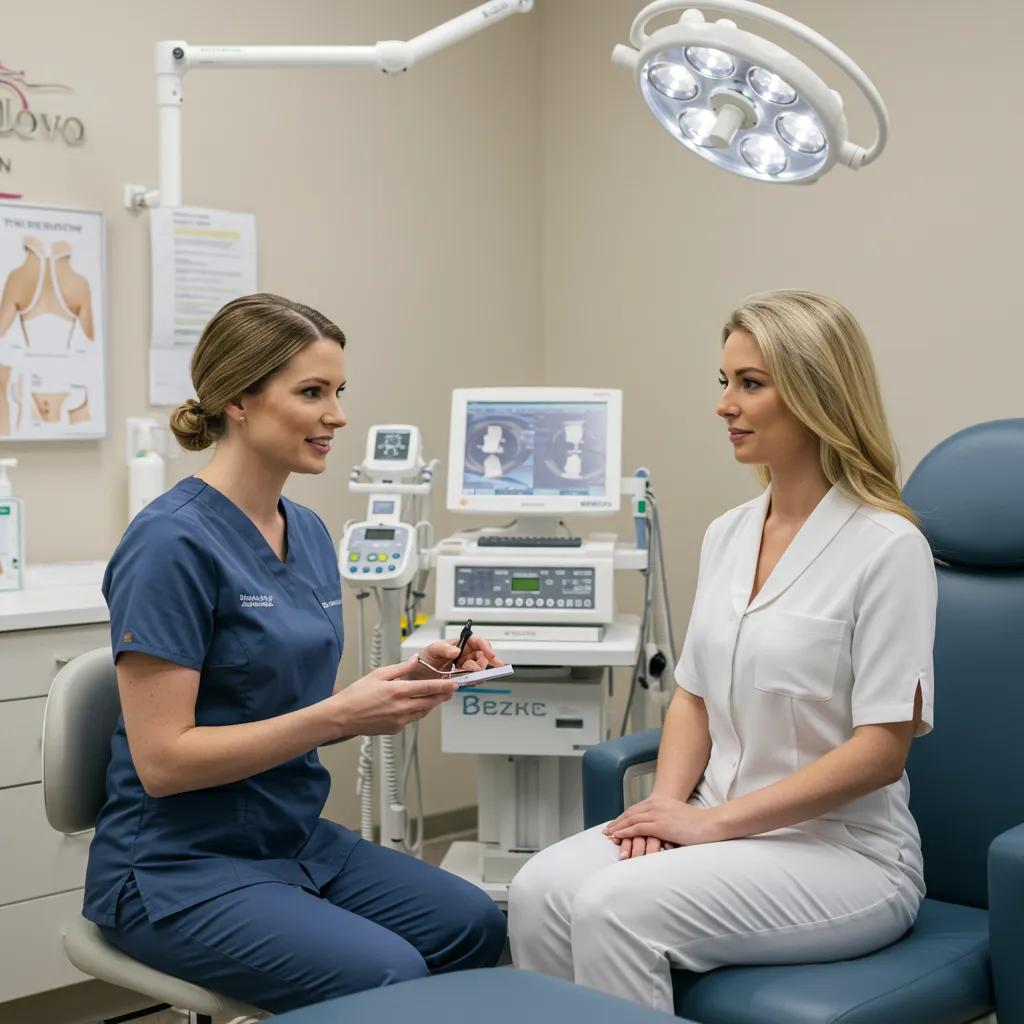
Minimally Invasive Breast Augmentation: Achieve Faster Recovery and Natural Results
Enhance your breast size and shape with minimally invasive breast augmentation, a technique that uses small incisions for reduced scarring and quicker recovery, all while delivering beautifully natural contours. For many women, traditional breast enhancement involves larger incisions and a longer downtime. Minimally invasive techniques address these concerns by minimizing tissue disruption. In this guide, you’ll learn how these advanced methods differ from conventional surgery, explore key techniques like endoscopic augmentation and fat transfer, understand the primary benefits—such as a faster return to daily life and minimal scarring—and discover the personalized procedure options available at Chirurgia Plastica MD. We’ll also cover pre-operative preparation, typical recovery timelines, and why Moldova’s thriving medical tourism scene makes Chirurgia Plastica MD an excellent choice for international patients. By the end of this article, you’ll be well-equipped to determine if minimally invasive breast augmentation aligns with your aesthetic aspirations and lifestyle.
What is Minimally Invasive Breast Augmentation and How Does It Differ from Traditional Methods?
Minimally invasive breast augmentation is a cosmetic surgery approach that utilizes smaller incisions, specialized instruments, and precise techniques to minimize tissue trauma. While traditional breast augmentation often requires incisions of 4–6 cm beneath the breast crease or around the areola, minimally invasive methods employ incisions under 2 cm or access points in the armpit. This approach leads to less visible scarring, reduced swelling, and accelerated healing. Beyond scar minimization, minimally invasive procedures frequently use tools like endoscopes and insertion sleeves (such as the Keller Funnel) to ensure accurate implant placement through very small incisions.
To better understand these differences, let’s compare traditional and minimally invasive approaches:
- Traditional breast augmentation typically involves larger incisions and direct visualization without the aid of cameras.
- Minimally invasive techniques employ endoscopic cameras to guide implant insertion through tiny incisions.
- Conventional methods can lead to a longer recovery period (6–8 weeks) due to larger wounds.
- Minimally invasive approaches generally allow patients to resume light activities within a few days.
These distinctions provide a solid foundation for understanding specific techniques and their advantages, stemming from smaller incisions and reduced tissue disruption.
What Are the Key Minimally Invasive Techniques Used in Breast Augmentation?
Minimally invasive breast augmentation incorporates several advanced techniques designed to limit incision size while achieving optimal implant placement and aesthetic outcomes.
- Endoscopic Breast Augmentation: This method uses a small camera inserted through the incision to precisely create the implant pocket.
- Fat Transfer Breast Augmentation: This technique involves harvesting and injecting the patient’s own fat into the breast for subtle volume enhancement.
- Transaxillary Approach: This approach accesses the implant pocket through an incision in the armpit, eliminating any visible breast scars.
- Inframammary Minimal-Scar Technique: This method uses a tiny incision beneath the breast crease and employs specialized sleeves for implant insertion.
Each technique offers distinct benefits—from virtually invisible scars to enhanced control over implant positioning—catering to various patient preferences and anatomical considerations. These methods not only reduce incision length but also form the core of effective minimally invasive breast augmentation strategies.
How Do Minimally Invasive Approaches Reduce Incision Size and Scarring?
Below is a comparison of common minimally invasive techniques, their typical incision dimensions, and the resulting impact on scar visibility.
This data demonstrates how reducing incision size by up to 60 percent compared to traditional methods directly leads to thinner, less visible scars, enhancing long-term aesthetic satisfaction. Smaller wounds heal more quickly and are easier to conceal beneath clothing or within natural skin folds.
Which Patients Are Ideal Candidates for Minimally Invasive Breast Augmentation?
Minimally invasive breast augmentation is well-suited for individuals seeking subtle enhancement with minimal downtime and less noticeable scarring. Ideal candidates typically meet the following criteria:
- Possess sufficient natural breast tissue to help camouflage small incisions
- Desire a modest increase in volume (implants of 250–350 cc are often preferred)
- Have realistic expectations regarding shape and recovery
- Are in good overall health with no uncontrolled medical conditions
While patients with significant breast sagging (ptosis) or those desiring very large implants might require different approaches, many women can benefit from the reduced downtime and natural outcomes offered by minimally invasive methods. Understanding candidacy helps align the surgical technique with personal goals, promoting safe and predictable results.
What Are the Main Benefits of Minimally Invasive Breast Augmentation?
Minimally invasive breast augmentation offers numerous advantages through smaller incisions and less tissue disruption. By combining advanced instrumentation with refined surgical planning, patients experience faster functional recovery, minimized scarring, lower complication rates, and natural-looking contours. The adoption of these techniques in 2025 reflects a growing patient preference for proportionate enhancement with minimal impact on daily life. The benefits extend beyond cosmetic improvement to include psychological comfort derived from quick healing and discreet scarring, leading to higher overall satisfaction.
How Does Minimally Invasive Breast Augmentation Enable Faster Recovery?
Minimally invasive breast augmentation accelerates recovery milestones by minimizing tissue trauma and swelling. Patients can typically:
- Resume light household activities within 2–4 days
- Return to desk work and non-strenuous routines in approximately one week
- Engage in moderate exercise and upper-body movements after 2–3 weeks
- Achieve full healing and unrestricted physical activity by 4–6 weeks
This accelerated recovery contrasts with traditional methods, where extended wound healing often delays most activities for up to eight weeks. Faster functional restoration allows patients to regain their normal routines with confidence and comfort.
Why Does Minimally Invasive Surgery Result in Natural-Looking Breast Augmentation?
Minimally invasive surgery enhances natural breast aesthetics through precise pocket creation, optimal implant positioning, and smaller incisions that preserve tissue integrity. Key factors contributing to a lifelike outcome include:
- Camera-guided dissection that enables symmetrical implant placement
- The use of cohesive gel (gummy bear) implants for shape retention and a natural feel
- Fat transfer options that blend autologous tissue with minimal scarring
- Tailored planning to maintain the native breast contour and curvature
These elements contribute to a soft, seamless transition between the implant and breast tissue, delivering results that closely mimic natural anatomy.
How Does Minimally Invasive Surgery Lower the Risk of Complications Like Capsular Contracture?
Minimally invasive techniques reduce complication rates by limiting bacterial exposure and tissue handling. Smaller incisions decrease the risk of microbial contamination during implant insertion, and the use of the Keller Funnel prevents direct contact between the implant shell and the skin. This streamlined insertion process, combined with specialized sleeves, lowers the incidence of capsular contracture by up to 50 percent compared to conventional methods. Reduced tissue trauma also minimizes postoperative inflammation, further mitigating risks of fibrosis and implant displacement.
What Role Does Reduced Scarring Play in Patient Satisfaction?
Minimized scarring directly correlates with increased patient satisfaction by preserving the natural appearance of the breast and boosting confidence. When incisions are placed in discreet locations—such as the inframammary fold or armpit—scars tend to fade into existing skin creases or hair-bearing areas. Patients frequently report that less visible scarring enhances their comfort in swimwear, lingerie, and everyday clothing, reinforcing positive body image and overall contentment with their surgical outcome.
Which Minimally Invasive Breast Augmentation Techniques Are Offered at Chirurgia Plastica MD?
Chirurgia Plastica MD specializes in advanced minimally invasive breast augmentation methods, meticulously tailored to each patient’s unique anatomy and aesthetic goals. Our experienced surgeons, who have undergone international training and workshops, utilize state-of-the-art techniques to optimize safety and expedite recovery. We offer multiple procedural options to accommodate diverse preferences and clinical needs:
- Breast augmentation with implants, inframammary approach
- Breast augmentation with implants, transaxillary approach
- Breast augmentation, breast tissue preservation technique (fat transfer)
These services emphasize natural results, minimal scar visibility, and shortened healing times, underscoring our unwavering patient-first philosophy.
What Is Endoscopic Breast Augmentation and What Are Its Benefits?
Endoscopic breast augmentation employs a small camera inserted through a 1.5–2 cm incision to guide the creation of the pocket beneath the breast tissue or muscle. This approach enhances visualization, ensuring precise implant positioning while safeguarding surrounding structures. The benefits include reduced bleeding, minimized bruising, and less postoperative pain. Patients who choose endoscopic augmentation with our expert team at Chirurgia Plastica MD benefit from our surgeons’ proficiency in camera-assisted techniques and our steadfast commitment to achieving natural, lasting results.
Endoscopic Transaxillary Breast Augmentation: Safer Outcomes and Reduced Scarring
Endoscopic transaxillary breast augmentation had better outcomes, with lower rates of complications than the peri-areolar approach. Reviewing the literature, our study is the first direct comparison of peri-areolar and endoscopic transaxillary incisions using smooth implants. With the risk of anaplastic large cell lymphoma associated with certain macrotexture implants, endoscopic transaxillary approach using smooth implants is the safer technique and very good alternative choice for Asian women who do not want any scarring on their breasts.
Comparison of endoscopic transaxillary and peri-areolar approaches in breast augmentation with smooth implants, 2021
How Does Fat Transfer Breast Augmentation Work as a Minimally Invasive Option?
Fat transfer breast augmentation involves harvesting autologous fat through liposuction—typically from the abdomen or thighs—and then injecting purified adipose cells into the breast. This technique enhances volume without the need for implants, utilizing the patient’s own tissue for a soft, natural feel. Incisions for fat harvest and injection are less than 1 cm, resulting in barely perceptible scars. Ideal candidates appreciate the dual benefit of body contouring at the donor site and gentle breast enhancement.
What Are the Advantages of the Transaxillary and Inframammary Approaches?
Below is a comparison of two popular minimally invasive access routes and their respective advantages.
Both approaches facilitate precise implant placement while ensuring scars remain discreet, supporting long-term aesthetic satisfaction for patients seeking minimal visibility.
How Does Chirurgia Plastica MD Personalize Treatment Plans for Each Patient?
Chirurgia Plastica MD crafts bespoke breast augmentation plans through a patient-centered consultation process. Initially, our surgeons meticulously evaluate breast anatomy, tissue quality, and aesthetic aspirations. Subsequently, 3D imaging and trial sizers assist in determining the ideal implant volume and placement. The choice of implant—silicone, saline, or cohesive gel—is carefully matched to the patient’s preferences, lifestyle, and anatomical considerations. Patients can also schedule an online consultation via WhatsApp to explore options remotely. This comprehensive planning process ensures optimal outcomes that align with each individual’s unique needs.
How Should Patients Prepare for Minimally Invasive Breast Augmentation?
Effective preparation is crucial for maximizing safety and enhancing healing for minimally invasive breast augmentation. Patients should thoroughly understand pre-operative requirements and schedule meetings with their surgical team well in advance. Proper planning includes obtaining medical clearance, adjusting medications, and making lifestyle modifications to support optimal recovery. By adhering to tailored pre-operative instructions, individuals lay the groundwork for a smoother surgical experience and a faster return to their daily lives.
What Happens During the Initial Consultation and WhatsApp Online Enquiries?
During an in-office consultation or a remote WhatsApp session, patients discuss their medical history, aesthetic goals, and learn about minimally invasive options. Surgeons assess breast anatomy, review potential techniques, and present before-and-after portfolios. Virtual consultations via WhatsApp facilitate image exchange and real-time feedback, ensuring international patients receive the same meticulous planning as local clients. This initial dialogue fosters trust, clarifies expectations, and establishes the foundation for a safe, personalized surgical plan.
How Do You Choose the Right Implant Type: Silicone, Saline, or Gummy Bear?
Selecting the optimal implant involves careful consideration of material, shape, and firmness. The table below outlines key implant attributes.
Patients collaborate closely with surgeons to balance factors such as implant softness, firmness, and longevity, ensuring the final choice aligns perfectly with their anatomy and lifestyle.
What Are the Essential Pre-Operative Instructions to Follow?
To prepare effectively for surgery, patients should:
- Cease smoking at least four weeks prior to surgery to promote optimal healing.
- Adjust blood-thinning medications under physician guidance to minimize bleeding risk.
- Arrange for transportation and post-operative support for the initial 48 hours.
- Follow fasting guidelines on the day of surgery to ensure anesthesia safety.
Adhering to these essential steps helps minimize potential complications and supports an efficient recovery, allowing patients to focus on healing and resuming normal activities.
What Is the Typical Recovery Timeline After Minimally Invasive Breast Augmentation?
Understanding the recovery timeline is essential for patients planning time off work, childcare arrangements, and exercise routines. Minimally invasive breast augmentation generally accelerates healing compared to traditional methods, enabling a quicker return to daily life. While individual healing rates can vary, most patients experience a common pattern of milestone achievements within the first six weeks. Following post-operative guidelines diligently ensures a smooth progression through each phase of recovery.
How Soon Can Patients Resume Light Activities and Normal Routines?
Most patients can:
- Perform gentle arm movements and light household tasks within 2–4 days
- Return to sedentary work or desk duties after one week
- Engage in non-impact exercise, such as walking, around 10–14 days
- Resume more vigorous activities, including upper-body workouts, after 3–4 weeks
This timeline highlights how minimally invasive techniques significantly shorten restrictions on daily routines and physical activities when compared to traditional breast augmentation.
What Post-Operative Care and Pain Management Are Recommended?
Effective aftercare and pain management are crucial for ensuring comfort and promoting healing. Recommended measures include:
- Wearing a supportive surgical bra continuously for the first two weeks
- Applying cold compresses to reduce swelling and bruising
- Taking prescribed analgesics and anti-inflammatories as directed
- Attending scheduled follow-up visits for wound checks and early detection of any complications
These protocols help manage discomfort, maintain optimal implant position, and closely monitor patient progress.
How Are Long-Term Results Maintained After Surgery?
Sustaining optimal outcomes involves ongoing care and healthy lifestyle habits:
- Follow the surgeon’s guidance on massage techniques to help prevent capsular contracture.
- Maintain a stable body weight to preserve breast shape over time.
- Schedule annual check-ups with imaging as recommended by your surgeon.
- Wear supportive bras during exercise to protect implants and surrounding tissue.
Consistent adherence to these practices ensures long-lasting, natural-looking augmentation with minimal risk of late complications.
Why Choose Moldova and Chirurgia Plastica MD for Minimally Invasive Breast Augmentation?
Moldova has rapidly emerged as a competitive medical tourism destination, particularly for aesthetic procedures, offering high standards of care at exceptionally advantageous prices. Patients can achieve significant savings—up to 70 percent compared to Western Europe—while benefiting from highly skilled surgeons, modern facilities, and personalized service. Chirurgia Plastica MD perfectly embodies this value proposition, combining international expertise with a patient-first approach to deliver safe, natural results through advanced minimally invasive techniques.
What Makes Moldova a Growing Destination for Medical Tourism in Plastic Surgery?
Moldova attracts international patients by offering:
- Cost savings of up to 70 percent compared to many European countries
- Access to board-certified surgeons trained through global internships
- Modern clinics equipped with advanced surgical technology
- Convenient travel connections within Europe and beyond
These compelling factors position Moldova as an appealing choice for individuals seeking quality breast augmentation with a reduced financial burden.
How Does Chirurgia Plastica MD Ensure High-Quality, Affordable Care?
Chirurgia Plastica MD maintains affordability without ever compromising on safety or expertise. We provide transparent pricing—such as breast augmentation with implants via the inframammary approach, the transaxillary method, and the breast tissue preservation technique (fat transfe)—alongside flexible financing options. Our patient-centric philosophy ensures thorough consultations and customized surgical plans, reinforcing our commitment to excellence at competitive rates.
What Support Services Are Available for International Patients?
International patients receive comprehensive support designed to ease their journey, including:
- Assistance with travel itineraries and local accommodation arrangements
- Multilingual coordination services to facilitate seamless communication
- Airport transfers and local transportation arrangements
- Post-operative check-ins via WhatsApp or in-person visits
This full-service approach effectively removes logistical barriers, allowing patients to concentrate fully on their transformation and recovery.
How Can WhatsApp Consultations Facilitate Your Breast Augmentation Journey?
WhatsApp consultations offer a convenient and accessible channel for initial discussions, image sharing, and planning, transcending geographical limitations. Through secure messaging and video calls, patients can engage directly with our surgical team, receive personalized advice, and finalize treatment details before their arrival. This streamlined communication ensures clarity, builds essential trust, and paves the way for a successful procedure at Chirurgia Plastica MD.
Minimally invasive breast augmentation presents an ideal combination of aesthetic excellence and rapid recovery, supported by advanced techniques such as endoscopic assistance and fat transfer. By choosing Moldova and Chirurgia Plastica MD—a clinic celebrated for its personalized care, transparent pricing, and cutting-edge approaches—you are investing in a safe, natural, and efficient cosmetic transformation. Contact us today to explore your options and embark on your journey to renewed confidence.
About the Authors
Dr. Olesea Catărău
Board-Certified Plastic Surgeon | Specialist in Aesthetic Surgery, Reconstructive Microsurgery & Hand Surgery
Dr. Catărău has been practicing plastic surgery since receiving her specialist certification in 2019. She earned her medical degree from Nicolae Testemițanu State University of Medicine and Pharmacy (2014) and completed her surgical residency at the Republican Center for Microsurgery, Institute of Emergency Medicine, Chișinău.
Current Practice:
- Institute of Emergency Medicine, Chișinău
- Forum Clinic, Chișinău
Professional Memberships:
- International Society of Aesthetic Plastic Surgery (ISAPS)
- Romanian Association of Plastic Surgeons (ROAPS)
- Romanian Aesthetic Surgery Society (RASS)
- Romanian Society for Surgery of the Hand (RSSH)
- Moldavian Association of Plastic Reconstructive and Aesthetic Surgery (MAPRAS)
- Association of Traumatologists-Orthopedicians of the Republic of Moldova (ATORM)
Advanced Training: Dr. Catărău has completed specialized training programs across Europe and the United States, including courses in Brussels, Bucharest, Houston, Paris, and Aberdeen. Her continuing education includes participation in over 60 international conferences, workshops, and masterclasses focusing on advanced microsurgical techniques, aesthetic procedures, and reconstructive surgery innovations.
Dr. Maxim Melenciuc
Senior Consultant | Specialist in Hand Surgery, Plastic Surgery & Reconstructive Microsurgery
Dr. Melenciuc holds the highest medical category certification and specializes in hand surgery, plastic surgery, and reconstructive microsurgery. He graduated from Nicolae Testemițanu State University of Medicine and Pharmacy (2005) and completed his residency at the Institute of Emergency Medicine, Chișinău.
Current Practice:
- Republican Center for Microsurgery, Institute of Emergency Medicine, Chișinău
- Forum Clinic, Chișinău
Professional Memberships:
- International Society of Aesthetic Plastic Surgery (ISAPS)
- Romanian Aesthetic Surgery Society (RASS)
- Romanian Society for Surgery of the Hand (RSSH)
- Moldavian Association of Plastic Reconstructive and Aesthetic Surgery (MAPRAS)
- Association of Traumatologists-Orthopedicians of the Republic of Moldova (ATORM)
Advanced Training: Dr. Melenciuc maintains expertise through continuous professional development, having attended specialized programs in Brussels, Pisa, Paris, Aberdeen, Bucharest, and Cluj-Napoca. His training encompasses cutting-edge techniques in peripheral nerve microsurgery, perforator flap procedures, and lymphatic supermicrosurgery, with over 50 documented international training events.
Our Commitment to Excellence
Both surgeons maintain active practices at leading medical institutions in Moldova and regularly participate in international scientific conferences and advanced training programs. Their combined expertise spans aesthetic enhancement, complex reconstructive procedures, microsurgical techniques, and specialized hand surgery.
The medical information on this website is provided by licensed medical professionals and reflects current evidence-based practices in plastic and reconstructive surgery.
Ready to take the next step?
Schedule a free consultation to discuss your goals and see how our experienced specialists can help. Call +373 694 884 33, WhatsApp us, or use the chat below.

